
How to Plan a Brand Activation That Actually Drives Results
A stunning installation that gets no foot traffic. A launch event that trends on Instagram but doesn't move product. An expensive pop-up that generates zero qualified leads.
These are the outcomes brands get when they treat activations as a production challenge instead of a strategic one. The brands that win in experiential marketing build their activations backwards from a clear objective, and let every creative decision serve that objective.
Here's the framework we use at Rooted Design Collective to plan activations that deliver.
THE BEST ACTIVATIONS ARE BUILT BACKWARDS—FROM A CLEAR OBJECTIVE.
Before floor plans, before mood boards, before venue scouts: define the single emotional outcome you want your audience to walk away with. Not "awareness." Something specific. This brand understands me. This product is worth switching to. This company leads its space. That emotional objective becomes the creative brief's north star.
From there, everything else follows: who you're designing for, where your audience already gathers, what format earns their time, which sensory layers will carry the brand story, and how you'll measure whether it worked.
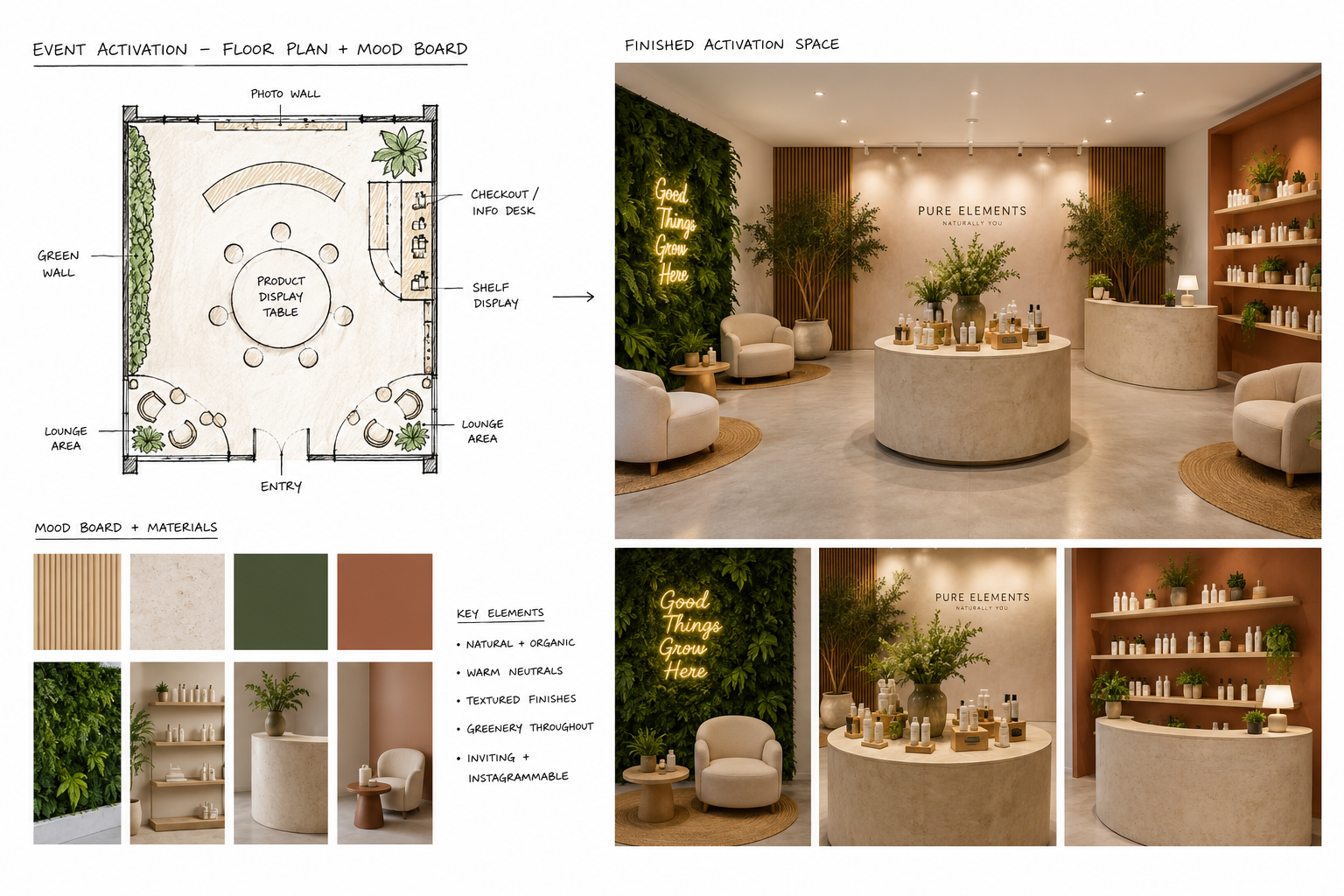
THE MOMENT THAT EARNS THE SHARE
Every activation has one moment: one space, interaction, or detail that will most compel someone to reach for their phone. Identify it early. Then over-invest in making it perfect. The activation's physical footprint has limits. Its digital reach doesn't, if you design for it.
Define your KPIs before the event, not after. Attendance, dwell time, social impressions, email captures, product trials, post-experience purchase intent: the right metric depends on the right objective. Measuring what matters lets you prove ROI, optimize future work, and make the case for continued experiential investment.
The most effective activations blend rigorous strategy with genuinely beautiful design. Neither alone is enough. Let's plan your next one!